
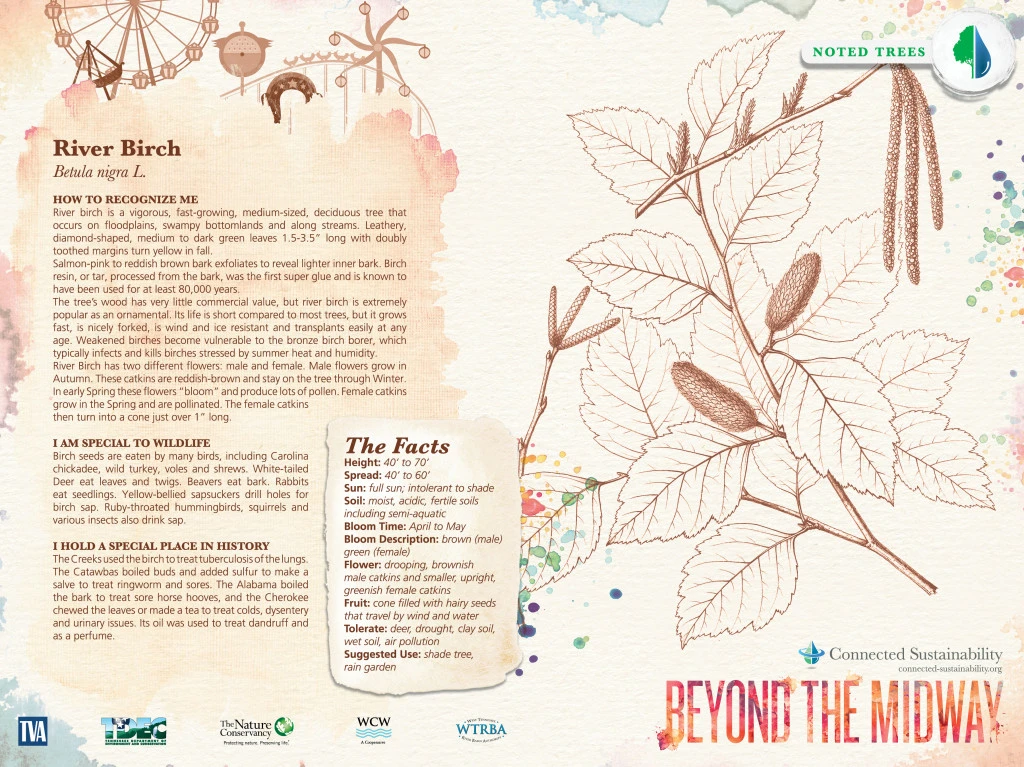
How to Recognize Me
River birch is a vigorous, fast-growing, medium-sized, deciduous tree that occurs on floodplains, swampy bottomlands and along streams. Leathery, diamond-shaped, medium to dark green leaves 1.5-3.5” long with doubly toothed margins turn yellow in fall.
Salmon-pink to reddish brown bark exfoliates to reveal lighter inner bark. Birch resin, or tar, processed from the bark, was the first super glue and is known to have been used for at least 80,000 years.
The tree’s wood has very little commercial value, but river birch is extremely popular as an ornamental. Its life is short compared to most trees, but it grows fast, is nicely forked, is wind and ice resistant and transplants easily at any age. Weakened birches become vulnerable to the bronze birch borer, which typically infects and kills birches stressed by summer heat and humidity.
River Birch has two different flowers: male and female. Male flowers grow in Autumn. These catkins are reddish-brown and stay on the tree through Winter. In early Spring these flowers “bloom” and produce lots of pollen. Female catkins grow in the Spring and are pollinated. The female catkins
then turn into a cone just over 1” long.
I Am Special to Wildlife
Birch seeds are eaten by many birds, including Carolina Chickadee, Wild Turkey, Voles and shrews. White-tailed Deer eat leaves and twigs. Beavers eat bark. Rabbits eat seedlings.Yellow-belliedSapsuckersdrillholesforbirchsap. Ruby-throated hummingbirds, squirrels and various insects also drink sap.